
Small ulcers with a big impact: mouth ulcers are tiny but often very painful ulcers of the oral mucosa. Many sufferers are familiar with the unpleasant spots that make it difficult to eat, drink or even speak. Even though mouth ulcers are harmless in most cases, they have a considerable impact on quality of life – especially if they recur. In the following article, you will find out what causes can have aphthae, how the symptoms manifest themselves and what options are available to alleviate the symptoms.
In medical terms, recurrent aphthae are referred to as recurrent aphthous stomatitis. This is one of the most common diseases of the oral mucosa [Scully & Porter, 2008].
Typical are round to oval ulcers in the mouth with a whitish-yellowish coating and an inflamed, reddened edge.
It is estimated that around 15 to 25 percent of the population in Central Europe are affected [Akintoye & Greenberg, 2014]. Aphthae often occur in the following areas:
The size can vary – from very small lesions to larger ulcers covering several millimeters.
The exact causes of aphthae have not yet been conclusively clarified. However, it is clear that it is not a bacterial or viral infection. Rather, immune reactions play a decisive role.
Aphthae are caused by an overreaction of the immune system in which T lymphocytes attack healthy tissue [Zhou et al., 2015]. As a result, tissue dies and the sensitive nerve endings are exposed – which causes the typical pain.
One possible trigger that is often overlooked is a nutrient deficiency. Studies show that the following deficiencies in particular can increase the risk of recurring aphthae:
Several studies indicate that up to 20% of people with recurrent aphthae have a vitamin B12 or folic acid deficiency [Volkov et al., 2009].
Tip: A balanced diet with plenty of fruit, vegetables, wholegrain products and sufficient fluids can support the health of the mucous membranes. If aphthae occur frequently, it is worth consulting a doctor to check whether there is a nutrient deficiency.
Aphthae symptoms are clearly recognizable: The small, bright spot in the mouth with a red border feels sore and painful.
Typical complaints:
The healing time is usually 7 to 14 days. After that, aphthae disappear on their own, but can reappear again and again [Scully & Porter, 2008].
As aphthae usually heal on their own, treatment focuses on relieving pain and supporting healing.
Many people initially resort to tried and tested household remedies:
The effectiveness of these home remedies is not always scientifically proven, but many sufferers report positive experiences.
In dentistry and oral care, various products are now available that are used specifically for aphthae. Modern preparations have the advantage that their composition is often specially tailored to the needs of the oral mucosa and the effect can be better controlled.
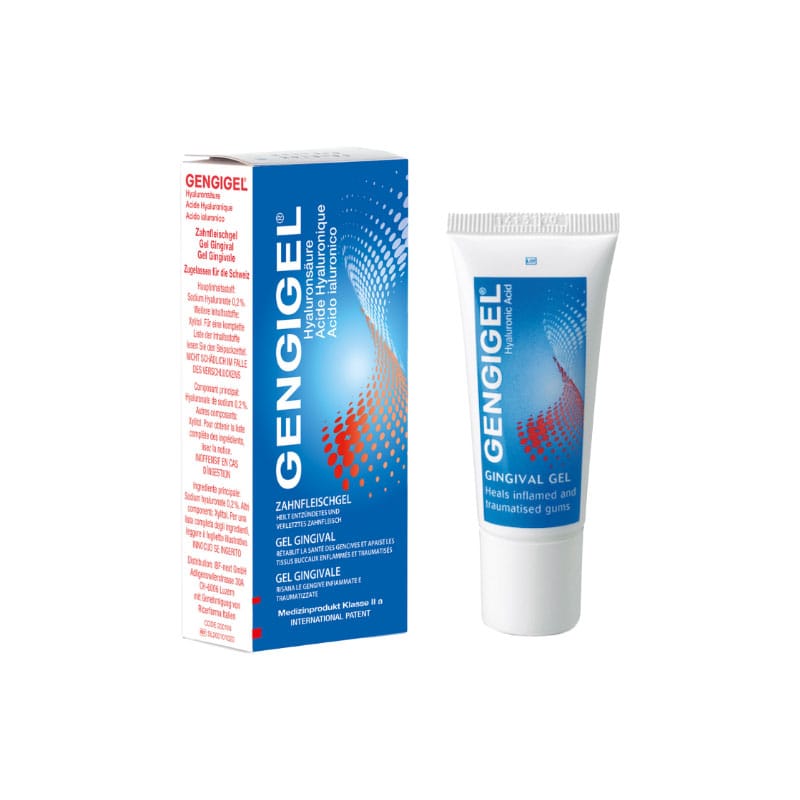
GENGIGEL’s clinically proven formula soothes pain, supports healing and protects sensitive areas in a natural way – without any chemicals that could cause burning of the mucous membranes.


In most cases, aphthae are harmless. However, a visit to the doctor is advisable if:
A dentist can clarify possible causes such as nutritional deficiencies or other illnesses and make specific treatment recommendations.
Aphthae in the mouth are small, but can be very painful and severely impair quality of life. Although the exact causes are not fully understood, immune reactions, genetic factors, stress and nutritional deficiencies play an important role.
The symptoms can often be alleviated somewhat with simple household remedies. Modern oral care products can also support the healing of the mucous membrane. However, it is advisable to seek medical advice if the symptoms occur frequently or are very severe.

Welcome to the new era of self-care!
Same Love, New Look. Our online store lachstark.ch has evolved—and now has a new name: CAREISTA.ch 🎉.

Let’s stay in touch! We’ll be in touch from time to time with exciting offers, topics, and new releases.
You are currently viewing a placeholder content from Vimeo. To access the actual content, click the button below. Please note that doing so will share data with third-party providers.
More InformationYou are currently viewing a placeholder content from YouTube. To access the actual content, click the button below. Please note that doing so will share data with third-party providers.
More InformationYou need to load content from reCAPTCHA to submit the form. Please note that doing so will share data with third-party providers.
More Information